Thursday, November 13, 2014

Jordan's Post #3: Deeds and Kettering letter


            The turn of the twentieth century was a unique time in Dayton’s history. Dayton was a thriving community of business and innovation. John Patterson had established the National Cash Register Company (NCR) on a new business and sales model that was extremely successful. Two of his subordinates made names for themselves and perhaps surpassed Patterson in fame and accomplishment. Edward A. Deeds and Charles F. Kettering had both worked for Patterson and NCR. Eventually, they both formed Dayton Engineering Laboratories Company (DELCO). This move helped launch their careers. Deeds became prominent locally through business and particularly through his efforts in the Miami Conservancy District after the flood in 1913. Kettering became known nationally as a great inventor through his more than three hundred patents. These two men were perhaps overshadowed by the accomplishments of the Wright Brothers. It is rare for cities to have been the home of any man as accomplished as these, but Dayton had many during one period of time. The fact is that these great men were in contact with each other. Their close proximity had allowed them to associate with each other. Dayton was not an intellectual island. Rather, great men of business and innovation were often in close contact. This connection greatly benefited Deeds and Kettering. They continued to write and work with each other at various times throughout their lives. In December 1940, Deeds wrote Kettering concerning the death of a colleague named George Smith. Apparently, Smith’s death was unexpected and he had been working on a business transaction that involved both Deeds and Kettering. This letter confirms that Kettering and Deeds were still working together nearly forty years after Deeds had hired Kettering at NCR in 1904. The second half of this letter concerned the upcoming holidays. Deeds wrote that he will spend Christmas with his grandchildren in Hartford and he assumed that Kettering would spend time with his grandchildren in La Grange. Deeds wrote, “If I have kept proper count, we each have three reasons for a Merry Christmas.” Fortunately, they would continue to keep in contact during the 1950s. I would like to imagine that they were good friends until they died about a year and a half apart.

The Kettering Family Papers. MS-363, Box 7. Wright State Special Collections and Archives. Wright State University: Dayton, OH.

Jordan's Post #2: Narrative account of a child during Dayton's Great Flood of 1913


            On March 25, 1913, just like any other school day morning, John Braun was woken up by his mother. As he made his way down the stairs, he could hear whistles and bells making loud noises outside. His mother explained that these alarms were warnings of an impending flood. As a ten year old, all of the commotion was very exciting to John. He expected to go to the school at Holy Rosary, but this day was different. The events of that tragic day prevented John from going to school that day and several days after. Since he lived on Light Street, John and his family were only a few blocks away from the flooding Mad River. John and his father left the house in order to discover the cause of all the turmoil. When they had reached the river, they realized the danger at once. The levee had broken and water began to rush down the street. The pair hurried home in order to warn the family of the imminent disaster. When they arrived at the house, they scrambled to move their possessions from the basement to the higher levels. After successfully completing one trip upstairs with a sack of potatoes, John scuttled back downstairs. As he descended the stairs, he quickly stopped because he couldn’t see the basement floor. John’s father quickly lit a match and, to their horror, the basement was full of water. In a panic, the family scurried to the second floor. John, his parents, his four siblings, and his grandma could all hear the water rising on the floor below. As the water filled the house, they could hear the furniture on the ground floor bumping the ceiling. They looked out their window and they could see the water swirling around the houses in their neighborhood. They saw their neighbors attempt an escape. The neighbors had piled into a motorboat, but, because of the fierce current, the boat overturned and the neighbors disappeared into the muddy waters. As night came and darkness descended, John and his family were filled with horror. In the distance, they could see downtown Dayton ablaze with uncontrollable fires. They could hear screaming and cries for help throughout the night. John’s parents did not know what was going to happen. They determined that if the waters were to rise even higher and flood the house, they would tie the family together and all die together. Although they were hungry and cold, they survived the night. Since the adjacent house was on higher ground, John’s dad knocked a hole in the wall and put down a plank that connected their home to their neighbor’s house. His parents told John that he was the first to cross. They tied a rope around him and he began to balance on the plank. When he reached halfway across, John stopped and looked down at the water. John’s father told him to be brave and encouraged him to push on to the other house. John made it safely across and the rest of the family made it without an accident. They stayed at their neighbor’s house through the rest of the day and night and ate potatoes and raw eggs to avoid starvation. On the third day, they saw some people in a rowboat approach the house. They had enough room for John, his sister Sarah, and his grandma. The rescuers docked somewhere near Valley Street and Chapel Street. Once the whole family was reunited, they found a family to stay with until the waters subsided. When the flooding had finally ceased, John and his father returned to the house to examine the damages. Their neighborhood was a mess. Their home was in shambles, debris filled the street, and mud was everywhere. John was frightened by the sight of a dead horse on the road. When he glanced across the street, he saw the motorboat overturned. The days of late March 1913 were full of tragedy. John couldn’t forget and he carried the memory of the events of those days into his old age.

Harrington 1913 Flood collection, SC-92. Wright State Special Collections and Archives.Wright State University: Dayton, OH.

Wednesday, November 12, 2014

As we have discussed so many local history topics one idea that resonates with me is the legacy of labor jobs here. The vast majority of citizens here in Dayton have a predisposition to look for Labor jobs. The issue is...the labor jobs aren't here or nearby. What's the historical president for this? What has Dayton done in the past to rejuvenate itself economically?  These are questions I think are important and need to be discussed as a community.

Wednesday, October 29, 2014

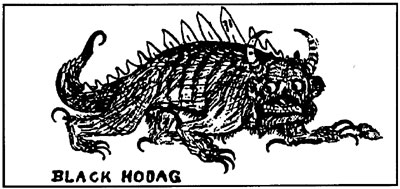
What is a Hodag?


Legends have a way of becoming engrained in the lives of a community's history.  As many of you know, I am a Packers fan and have spent a lot of time in the Northwoods of Wisconsin. But, have a I regaled you with the story of the Hodag of Rhinelander, Wisconsin?

hodag twoThe Hodag is a legendary creature in northern Wisconsin, especially in what was the lumbering camps.  The Hodag is described as a seven-foot long lizard-like beast with a "disproportionately large head, two horns growing from its temples, large fangs and green eyes. Covered with short black hair, the body appeared stout and muscular; its back was covered with spikes which led to a powerful tail. The four legs were short and sturdy with three claws facing forward and one pointing in the opposite direction."  It is also described as emitting a potent odor that smelled like a combination of "buzzard meat and skunk perfume."

The legend of the Hodag was popularized with the detailed description by Eugene Shepherd in 1896-97.  He organized a posse to capture the beast, but could only do so by killing it.  Then, three years later, according to legend, Shepherd and his crew 'captured' a live Hodag.  It was then a large attraction at the county fair where people came from far and wide to see the creature.  The Hodag, then became an icon for Rhinelander.


Of course it was revealed that the Hodag capture and creature was a hoax concocted by Shepherd.  Now, the reason was to stimulate the economy of Rhinelander and the surrounding area.  The lumbering communities were leaving the area because they had depleted much of the pine trees around Rhinelander.  So, Shepherd devised the idea of the Hodag. The 'live' Hodag was actually given life-like qualities at the Oneida County Fair by a series of pulleys and the growling of the creature performed by Shepherd's son.  Even though the Hodag is a legend and an elaborate hoax, it is still widely recognized as a tourist attraction for the city of Rhinelander.  You still don't believe me? Even the Travel Channel's Mysteries at the Museum did a feature on it!

Travel Channel's Mysteries at the Museum
Mysteries at the Museum-Rhinelander Museum

Want to learn more about the Hodag?
http://www.hodagpress.com/about.htm

*And I just found out something interesting. According to my dad, my great-grandmother, who grew up and lived her entire life in Rhinelander, met Shepherd. Just another interesting tidbit of information.*

Thursday, October 9, 2014

Jordan's Post #1: Yellow Spring Society of Friends

For whatever reason, my search for a local history topic took me to the Society of Friends. The Society of Friends, better known as the Quakers, is a religious organization and denomination of Christianity. The Quakers are recognized for various practices and doctrine. One such practice is their annual and monthly meetings. At these gatherings, Quakers from smaller meetings congregate at a single location and discuss spiritual and organizational issues. Southwest Ohio has a long history of Quaker settlement. Because of this history, places in Southwest Ohio and Eastern Indiana have often been selected to house these meetings. The annual meetings bring in more Quakers because they draw in Quakers from a larger region. Yet, monthly meetings are still important.

An example of a monthly meeting location was in Yellow Springs. Included in the Yellow Spring’s Society of Friends collection at the WSU archives is a large amount of membership removal forms from the 1950s to the 1970s. Much can be learned or assumed by the examination of the members’ reasons for leaving. The most common reason for dropping membership was death. This reason does not lead to many conclusions, but it does indicate that many Quakers remained Quakers throughout their lifetime. It was also common for members to transfer to another meeting. This could be that another closer meeting had sprung up, but, most likely, it was a result of the member’s move to another residence. This could indicate that many members were leaving the area and could reflect a broader trend. Another common reason listed for leaving the Society of Friends was “lost contact.” Oftentimes, the Quakers would send formal letters to members of the group who had not been involved in Quaker activities. If the member did not respond, he was assumed to have lost interest in the Society of Friends and would be dropped from membership. Another reason for leaving was a transfer to a Unitarian group. Although this reason was not as prevalent as previously mentioned causes, it was not a rare occurrence for Friend members to become a member of a Unitarian group. The Unitarian Church and the Society of Friends both encompass a broad spectrum of beliefs (maybe more so with the Unitarian Church), but they do exhibit some similar doctrines. Some Unitarians and Quakers believe in pacifism. This similarity could have made the transition for these ex-Quakers to be easier than if they had switched to another denomination.

Primary Source Used:
Society of Friends
Indiana-Ohio Valley
Yellow Springs Monthly Meeting
WSU Archives MFM 125

Tuesday, September 9, 2014

Post #1

For this first weeks blog post I wanted to write about the recent media attention covering the Wal-Mart shooting in Beavercreek. This is a local event that has taken place in our community but has also had a larger effect on people outside of the Miami Valley. Since the fatal shooting of a local man, there has been protests and national attention directed toward the Dayton area. Dayton Daily news has even reported that the national civil rights figure Reverend Al Sharpton plans to visit the Dayton area the bring awareness to the incident. This group hopes to build support for the release of video footage of the shooting. This shooting is reminiscent of similar police shooting events that have taken place across the United States. Any precedents set in this case will serve as an example in future police shootings. It is clear that this event is important on a much larger scale than just Dayton, and supports the argument of local history importance. Unfortunately there have been protesters urging the investigation of police brutality. If the officers involved in this particular case are charged with a lawsuit involving brutality or civil rights, I would expect much more national attention in the Dayton area. 
Below I have included a link to the Dayton Daily News website with more information on the topic. 

 http://www.daytondailynews.com/news/news/al-sharpton-wont-appear-at-walmart-shooting-rally/nhBPW/

Wednesday, August 27, 2014

Welcome to HST 7700 Fall 2014 Class Blog


Hi everyone! Welcome to our class blog on local history. This blog was created for you to share local history stories with the class. Remember, the stories can come from any source. Use the sources you are learning about in your weekly assignments, but don't just post your assignment papers. Study a particular person, place, event or subject in a source and write about it for the blog. It can be from a letter, diary, newspaper, photograph, film, government record, map... the list is endless. Have fun!